
Understanding the Brain to Improve Everyday Functioning and mental health
Neuropsychology explores how the brain influences thinking, memory, attention, behaviour, emotions, and everyday functioning.
At NeuroLab Mental Health, we combine traditional neuropsychological assessment with advanced neuroscience-based interventions to provide a comprehensive understanding of each individual’s cognitive and emotional profile as well as provide treatment of different mental health conditions.
Our approach integrates psychology, neuropsychology, psychiatry, QEEG brain mapping, Neurofeedback, and TMS to deliver truly personalised care.
Who May Benefit From Neuropsychology?
Neuropsychological services may be helpful for individuals experiencing:
- Memory difficulties
- Attention and concentration problems
- Executive functioning challenges
- Cognitive changes
- Brain injury
- Concussion
- Neurological conditions
- Persistent cognitive complaints
- Difficulties returning to work after illness or injury
- Cognitive difficulties associated with anxiety or depression
Comprehensive Neuropsychological Assessment
A comprehensive neuropsychological assessment provides an in-depth understanding of how cognitive, emotional, behavioural, and neurological factors may be influencing everyday functioning.
The assessment explores a broad range of cognitive abilities, including attention, memory, executive functioning, processing speed, reasoning, and emotional functioning. The goal is to identify both strengths and areas of difficulty while developing a clear understanding of how these factors impact daily life.
When Might This Assessment Be Helpful?
A comprehensive neuropsychological assessment may be beneficial for individuals experiencing:
- Persistent concentration difficulties
- Memory concerns
- Cognitive changes
- Difficulties at work or university
- Executive functioning challenges
- Brain fog
- Concerns following illness or injury
- Complex presentations involving both cognitive and emotional difficulties
What Can It Help With?
The assessment can help clarify the nature of cognitive difficulties, identify contributing factors, guide treatment planning, and provide practical recommendations for education, employment, and everyday functioning.
Cognitive Assessment
A cognitive assessment evaluates key thinking skills that support learning, problem-solving, communication, decision-making, and everyday functioning.
Areas commonly assessed include intellectual abilities, attention, processing speed, memory, executive functioning, and reasoning.
When Might This Assessment Be Helpful?
This assessment may be appropriate for individuals who:
- Feel their cognitive performance has declined
- Experience difficulties concentrating
- Struggle with learning or academic demands
- Have concerns regarding memory
- Require clarification of cognitive strengths and weaknesses
- Need recommendations for education or work
What Can It Help With?
A cognitive assessment can provide a detailed profile of strengths and difficulties, helping guide interventions, educational planning, workplace accommodations, and treatment recommendations.
Memory Assessment
Memory difficulties can significantly impact confidence, work performance, relationships, and everyday life. A memory assessment explores how information is learned, stored, and retrieved across different memory systems, including verbal memory, visual memory, working memory, and long-term recall.
When Might This Assessment Be Helpful?
Memory assessment may be recommended for individuals who:
- Frequently forget conversations or appointments
- Experience difficulties retaining new information
- Notice changes in memory functioning
- Have concerns following concussion or illness
- Feel that memory difficulties are affecting daily life
What Can It Help With?
The assessment can identify patterns of memory strengths and weaknesses, clarify contributing factors, and inform recommendations for treatment, rehabilitation, and compensatory strategies.
Executive Function Assessment
Executive functions are the cognitive skills responsible for planning, organisation, self-regulation, time management, decision-making, and problem-solving.
These skills play a critical role in academic achievement, workplace performance, and independent living.
When Might This Assessment Be Helpful?
This assessment may be beneficial for individuals who:
- Struggle with organization
- Have difficulty managing deadlines
- Frequently procrastinate
- Feel overwhelmed by multitasking
- Experience challenges with planning and prioritisation
- Have difficulties maintaining routines and structure
What Can It Help With?
The assessment can identify executive functioning strengths and challenges and provide practical recommendations to improve daily functioning, productivity, and independence.
Brain Injury and Concussion Assessment
Brain injuries and concussions can affect cognitive functioning, emotional wellbeing, and quality of life long after the initial injury has occurred.
Neuropsychological assessment helps evaluate the impact of injury on cognitive performance and everyday functioning.
When Might This Assessment Be Helpful?
This assessment may be appropriate for individuals who:
- Have experienced a concussion
- Have sustained an acquired brain injury
- Report ongoing cognitive difficulties after injury
- Experience persistent headaches, fatigue, or concentration difficulties
- Have concerns regarding recovery and return to work
What Can It Help With?
The assessment can identify areas affected by injury, guide rehabilitation planning, monitor recovery, and support return-to-work or return-to-study recommendations.
QEEG Brain Mapping
QEEG Brain Mapping is a non-invasive assessment that analyses patterns of electrical brain activity and provides objective information regarding brain network functioning.
It can be used alongside clinical assessment to provide additional information that may help guide treatment planning. This is usually recommended in some mental health problems presentation, when a neuroscience treatment could be beneficial.
When Might This Assessment Be Helpful?
QEEG may be considered for individuals experiencing:
- Attention difficulties
- Emotional regulation challenges
- Anxiety
- Depression
- Sleep difficulties
- Cognitive fatigue
- Performance-related concerns
What Can It Help With?
QEEG can provide insights into brain activity patterns, assist in treatment planning, establish baseline measures, and support progress monitoring throughout intervention.
Neurofeedback
Neurofeedback is a non-invasive intervention that uses real-time information about brain activity to help individuals develop greater self-regulation and optimise brain functioning.
When Might This Assessment Be Helpful?
Neurofeedback may be considered for individuals experiencing:
- Attention difficulties
- Emotional dysregulation
- Anxiety
- Stress
- Sleep difficulties
- Cognitive fatigue
- Performance-related concerns
What Can It Help With?
The goal of Neurofeedback is to improve self-regulation, cognitive performance, emotional wellbeing, resilience, and everyday functioning.
Transcranial Magnetic Stimulation (TMS)
TMS is a non-invasive neuromodulation treatment that uses magnetic pulses to stimulate specific brain networks involved in mood, cognition, and emotional regulation.
When Might This Assessment Be Helpful?
TMS may be considered for individuals experiencing:
- Depression
- Treatment-resistant depression
- Persistent low mood
- Anxiety-related symptoms
- Cognitive difficulties associated with mood disorders
What Can It Help With?
TMS aims to improve mood, emotional regulation, motivation, cognitive functioning, and overall quality of life.
Cognitive Rehabilitation
Cognitive rehabilitation focuses on helping individuals improve cognitive functioning and develop practical strategies for managing everyday challenges.
When Might Cognitive Rehabilitation Be Helpful?
This intervention may benefit individuals experiencing:
- Memory difficulties
- Executive functioning challenges
- Cognitive fatigue
- Difficulties following concussion or illness
- Workplace or academic performance difficulties
What Can It Help With?
Cognitive rehabilitation aims to improve independence, confidence, performance, and quality of life by addressing real-world cognitive challenges.
Our Assessment Pathway
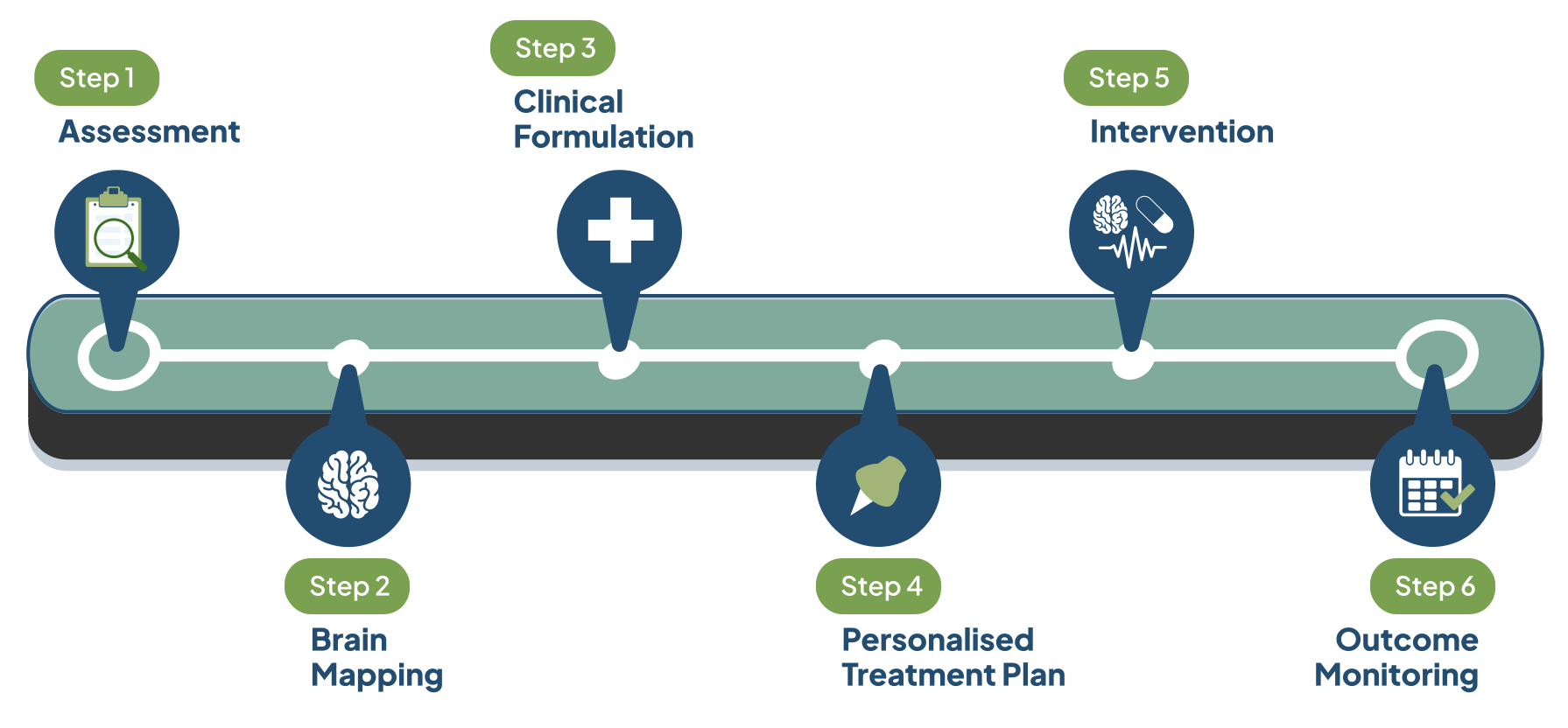
Comprehensive neuropsychological
and clinical evaluation.
QEEG assessment where indicated.
Integration of cognitive, emotional,
behavioural, and neurological findings
Recommendations tailored
to individual needs and goals.
Neurofeedback, TMS, cognitive
rehabilitation, psychology, psychiatry,
or combined approaches.
Regular review of progress
using clinical and objective
measures.
Frequently Asked Questions
What is neuropsychology?
Neuropsychology studies the relationship between brain function, cognition, behaviour, and emotional wellbeing.
What is the difference between psychology and neuropsychology?
Psychology focuses on emotional and behavioural wellbeing, while neuropsychology specifically examines cognitive functioning and brain-behaviour relationships.
Do I need a referral?
Most clients can self-refer.
What is QEEG?
QEEG is a non-invasive assessment of brain electrical activity.
What is Neurofeedback?
Neurofeedback is a form of brain training designed to improve self-regulation.
What conditions can TMS help with?
TMS is most commonly used for depression but may also be considered for other conditions.
Can neuropsychology help after a concussion?
Yes. Neuropsychological assessment can help identify cognitive difficulties and guide rehabilitation.
Can cognitive difficulties be treated?
Many cognitive difficulties can improve through targeted intervention, rehabilitation, and compensatory strategies.
How long does an assessment take?
Assessment length varies depending on the complexity of the referral question.
Will I receive a written report?
Yes. Detailed reports and recommendations are provided following assessment.
Why Choose us as your
preferred Mental Health Clinic?
Clinical Expertise
Our assessments are grounded in evidence based clinical psychology and neuropsychology.
We work from a neurodiversity affirming perspective, combining clinical expertise with an understanding of mental health, emotional wellbeing and everyday functioning.
Where appropriate, assessment findings can be integrated with other mental health supports to provide continuity of care over time.
Take the Next Step
If you are seeking clarity, understanding and support around ADHD, assessment can be an important step forward.
Whether for a child or an adult, understanding how the brain works helps reduce uncertainty and supports wellbeing, regulation and quality of life.
Request A Telephone Consultation
Our team is here to guide you to the most appropriate pathway. For appointments, referrals, or programme enquiries, please contact us using the details below.
Phone:
Email:
Address:
26 Clare Street Medical Center, Dublin 2, D02 VX59
Working Hours:
Monday – Sunday (10am-4pm)